Destination Wedding Photography Behind the Scenes | San Diego Wedding
Traveling for Haile & Joe’s Junípero Serra Museum Wedding in San Diego, California
What does it actually look like when you hire a destination wedding photographer for an out-of-state wedding?
For Halie and Joe’s Junípero Serra Museum wedding in San Diego, the work began months before the camera came out.
From researching a brand new venue and building a flexible timeline to navigating a 30-minute delay and helping a shy flower girl feel comfortable before the ceremony, this wedding was a perfect example of everything that happens behind the scenes.
In this guide, I’m taking you through my approach of an out-of-state wedding day, including how I prepare for unfamiliar venues, work alongside vendors, adapt when plans change, and create a calm experience for my couples while still capturing every important moment.
Here’s what we’ll cover:
- Preparing for a wedding in a new location
- How I scout and plan an unfamiliar venue
- Building a relationship with couples before the wedding
- Why buffer time can save a wedding-day timeline
- How I handle unexpected changes
- Preparing for the ceremony and changing light
- Working with planners, florists, and other vendors
- Why photographer presence matters just as much as photography
- What couples should look for when hiring an out-of-state or destination wedding photographer
- When you should book your destination wedding photographer
- Questions to ask when hiring an out-of-state wedding photographer
A Wedding Day Begins Long Before I Arrive
A wedding day may only last a few hours, but for me, the work begins long before I arrive with my cameras.
For Halie and Joe’s wedding at Junípero Serra Museum in San Diego, that meant months of planning, researching a venue I’d never photographed before, getting to know them over video calls, and building a timeline that could leave room for the unexpected.
There was this aligned connection from the get-go; Halie and I discovered we both attended the same college and probably crossed paths at some point!
After getting to know both of them through months of video calls before their wedding, meeting them in person felt less like meeting clients for the first time and more like reuniting with people I’d already come to know.
Preparing for a Brand-New Wedding Venue
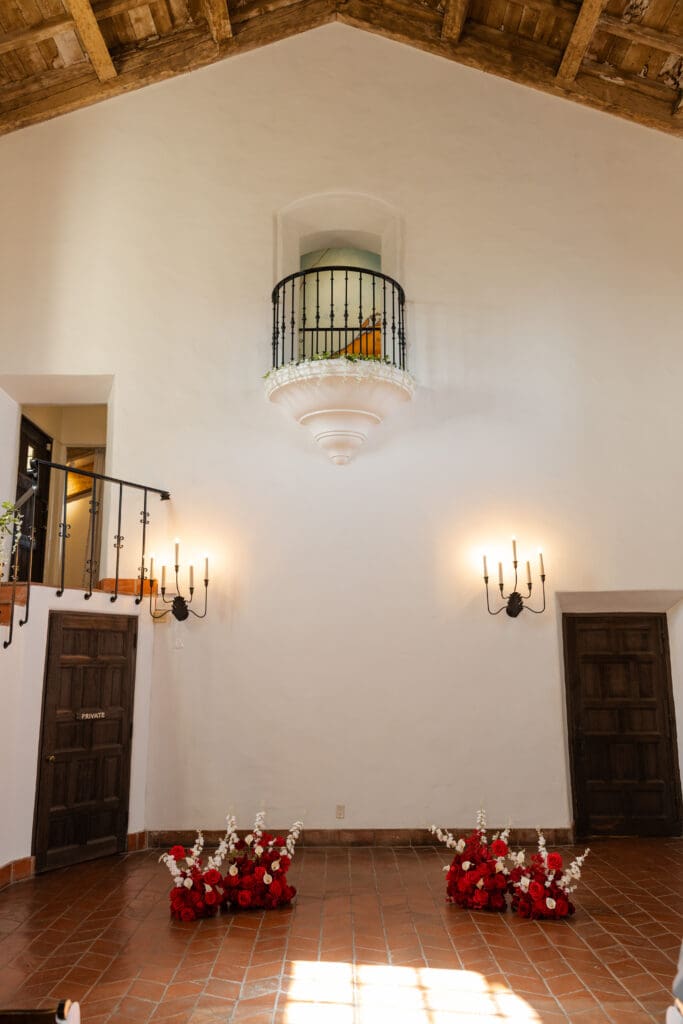
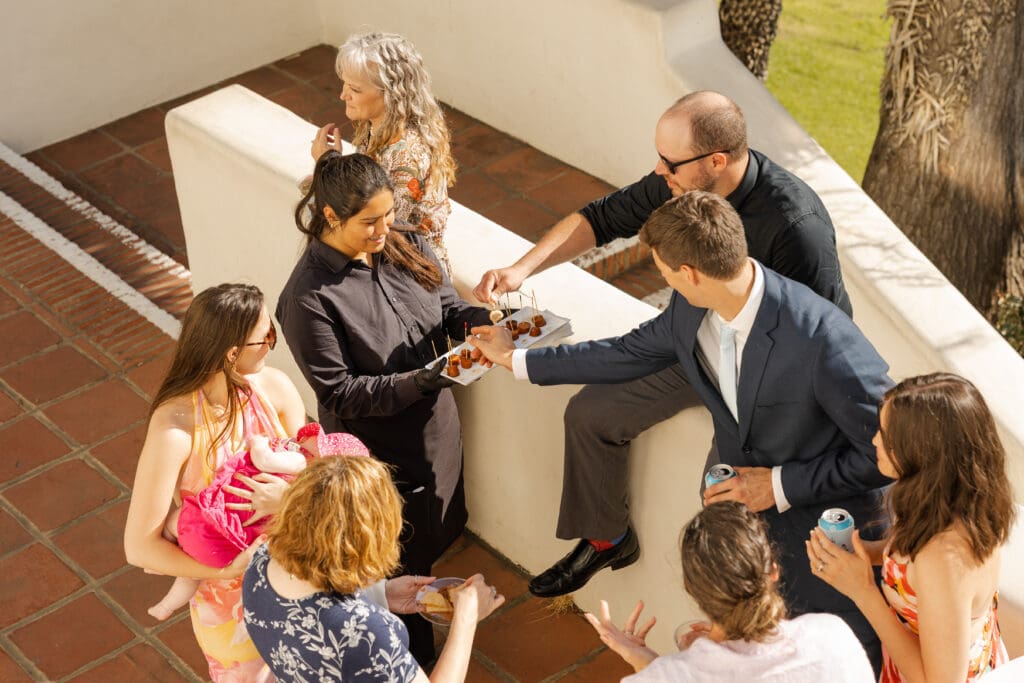
I had never been to Junípero Serra Museum before, but I had spent some time getting to know the venue from home. Halie shared videos and photos with me and I researched the venue through Google Maps, Street View, Instagram, and previous wedding galleries.
I try to understand the property as best as I can before even stepping on it.
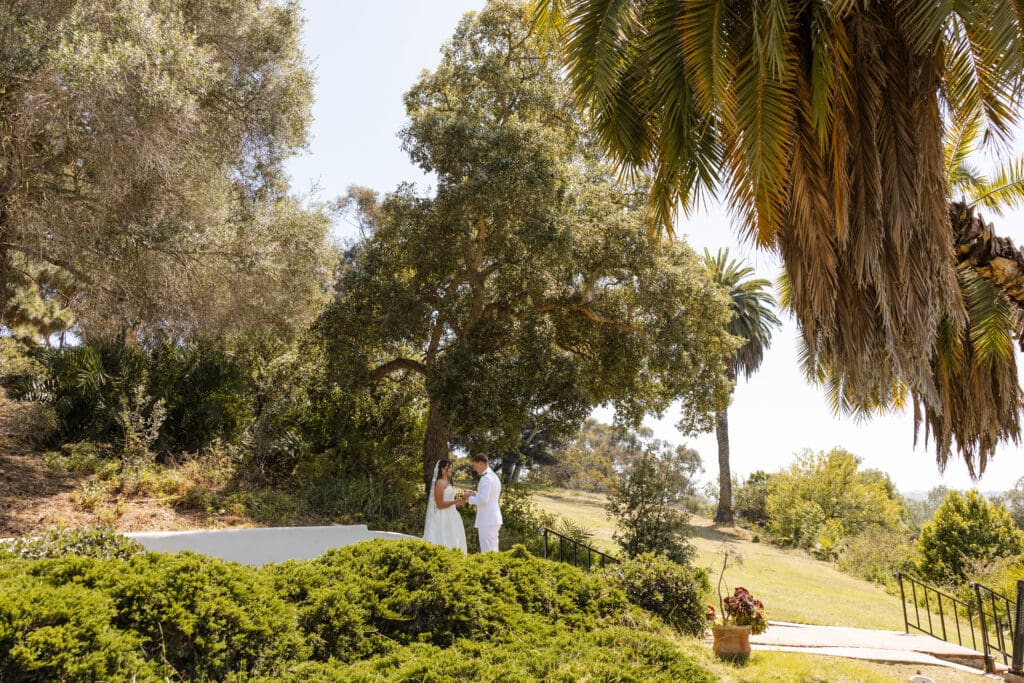
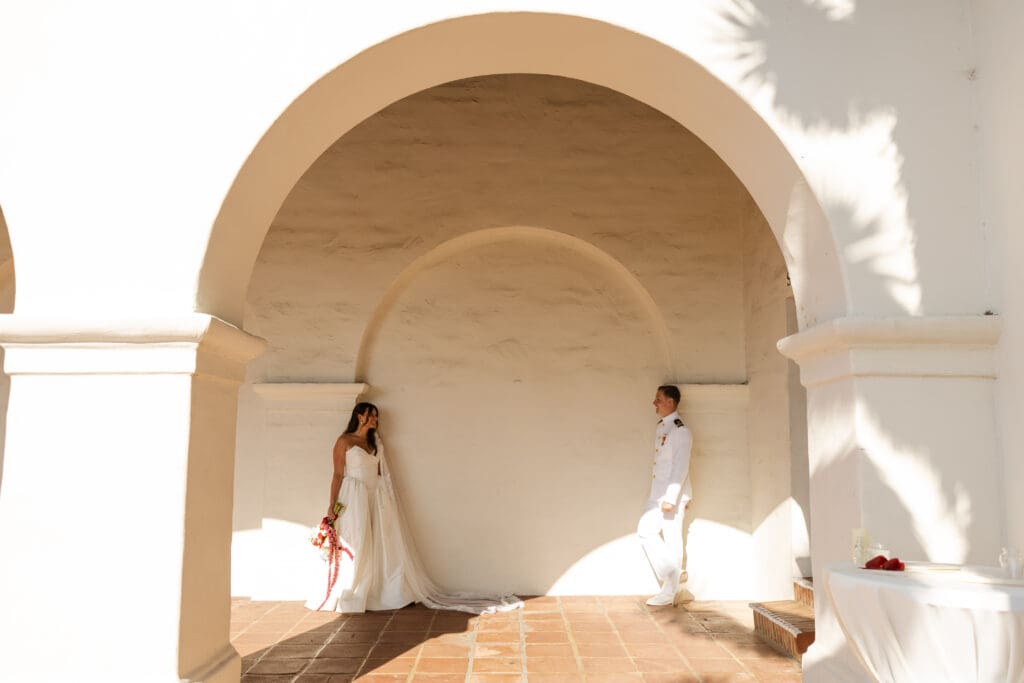
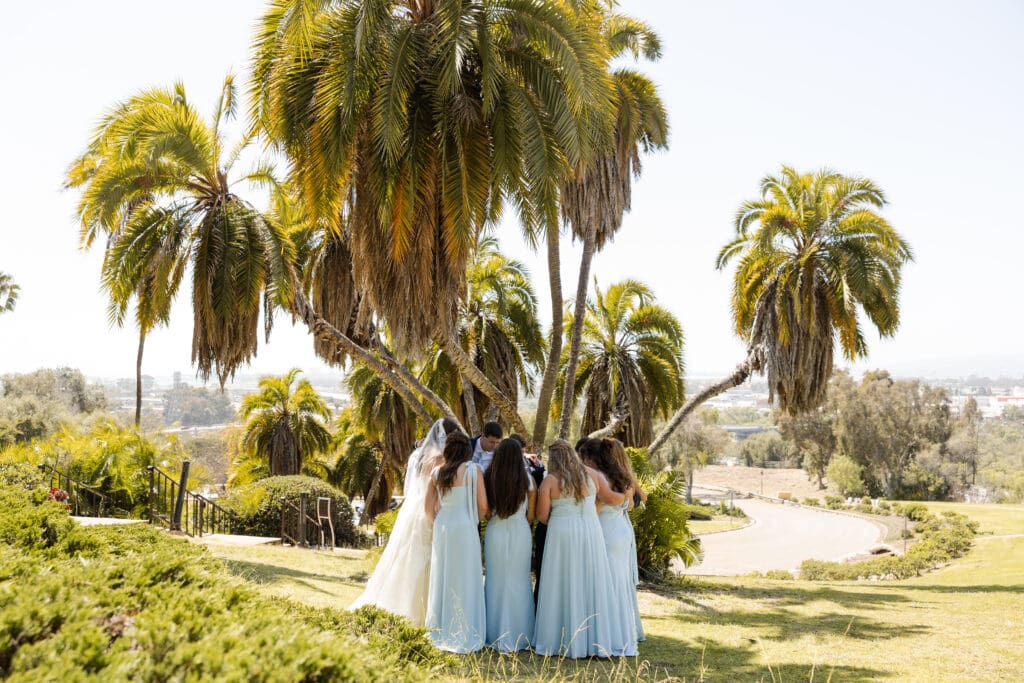
I’m thinking: Where would the first look happen? Where would family portraits make the most sense? Which areas would work best for the bridal party? Where would I want to photograph the couple when the light became softer?
Arriving about an hour before my coverage began allows me time to walk the property before and see how everything looked in real time.
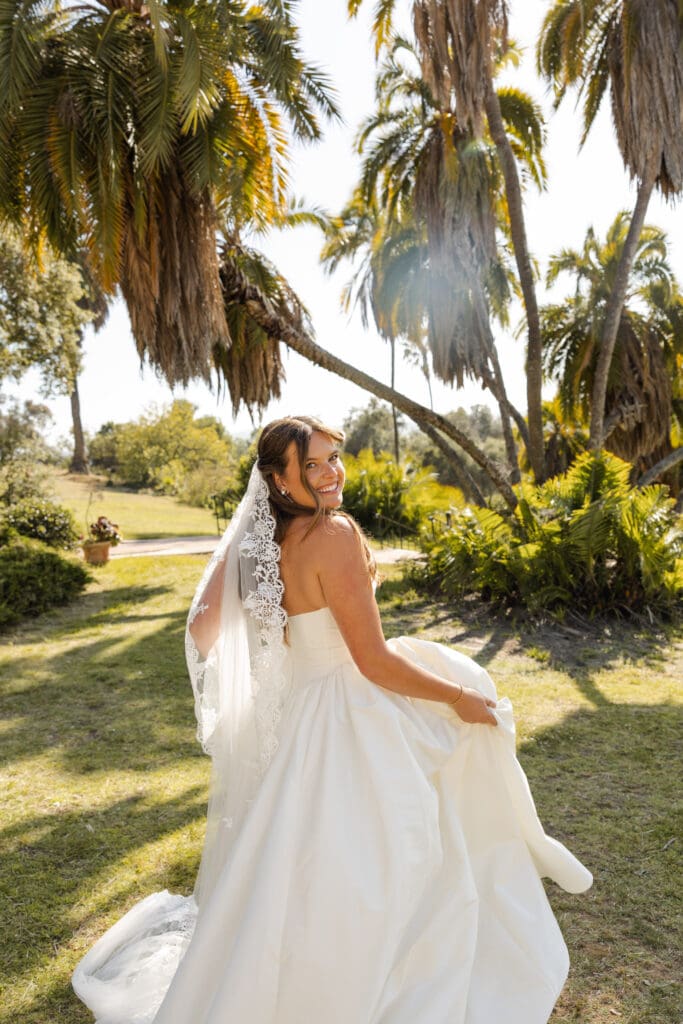
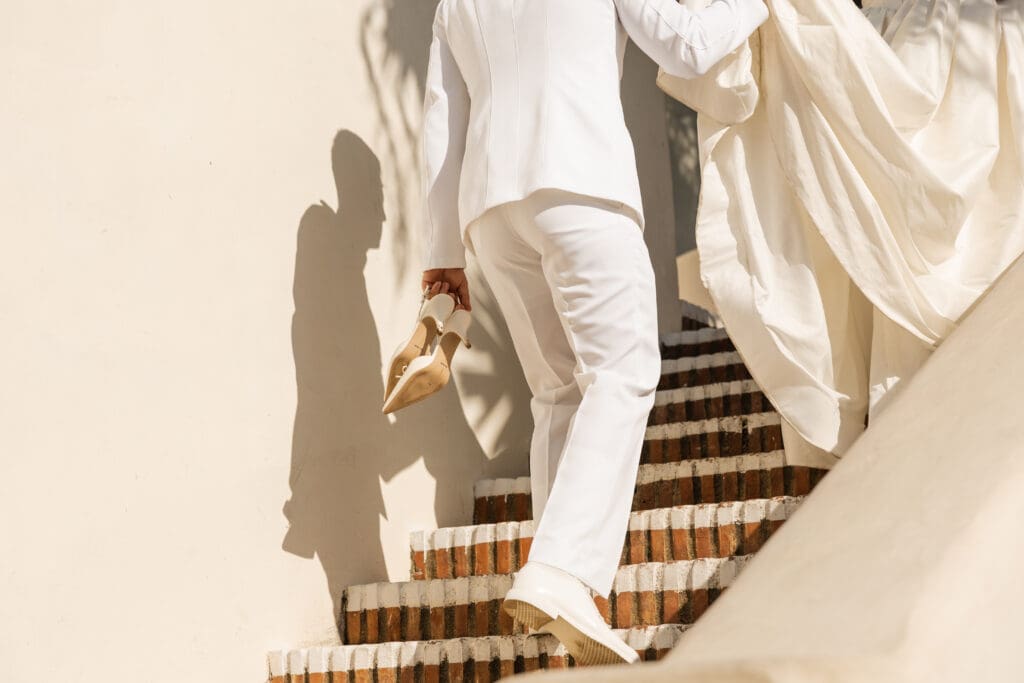
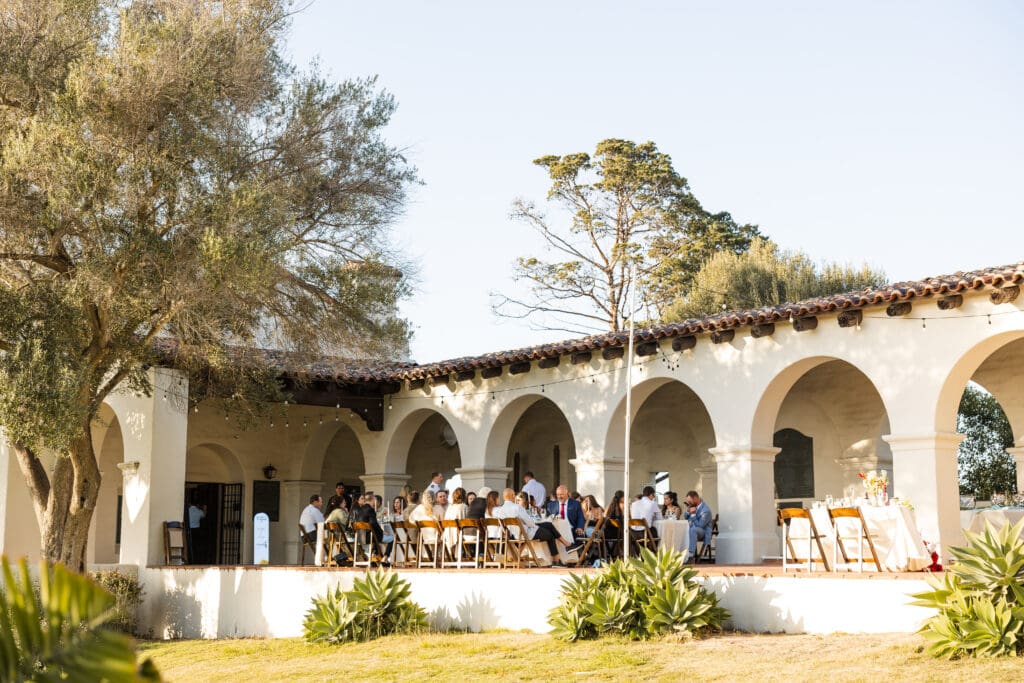
This scouting time is incredibly valuable. I knew which staircase was perfect for showing off Halie’s full dress, which palm trees creating beautiful backdrops for formal portraits and how the west-facing light creating dramatic shadows across the property as the afternoon progressed.
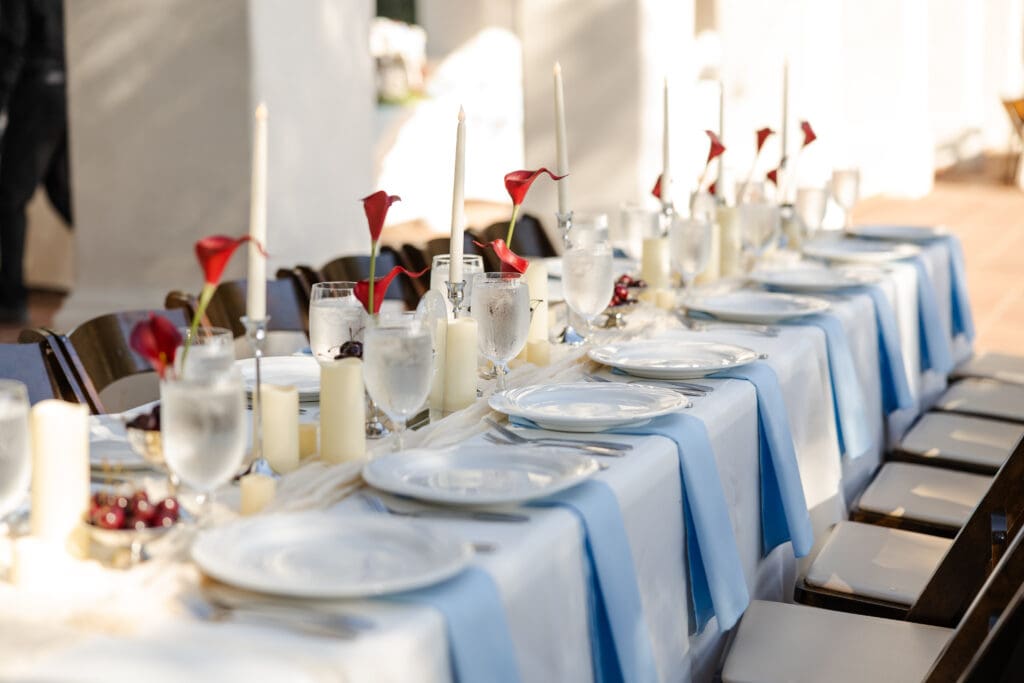
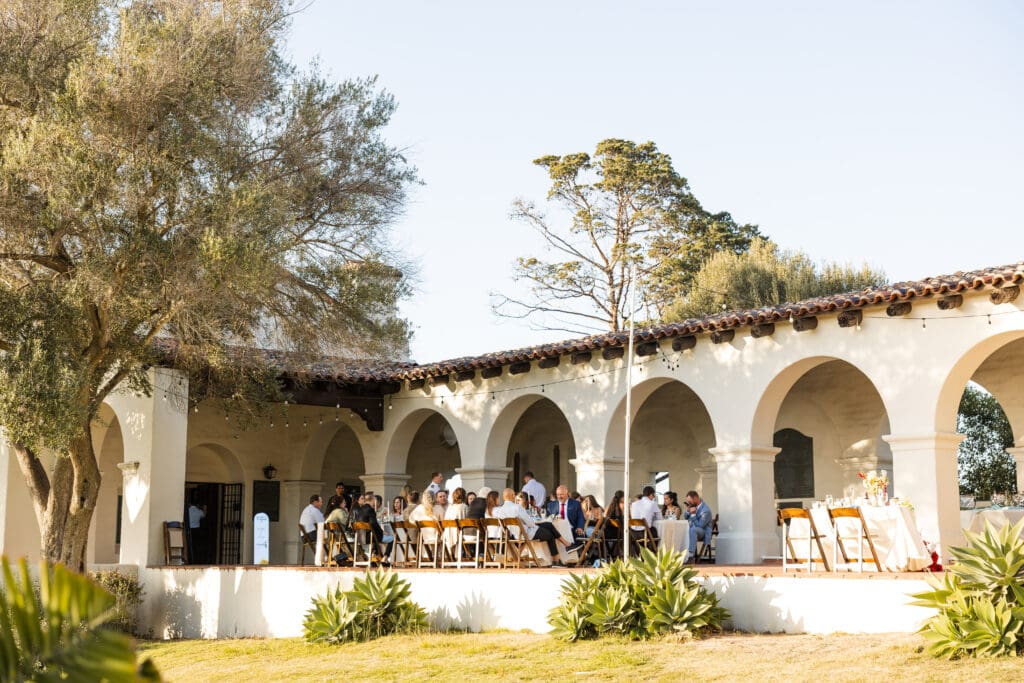
I also knew I wanted to photograph the reception space during sunset with how beautifully it looked in that light.
Preparing for an Out-of-State Wedding as a Destination Photographer
There is a little more logistics involved when a wedding takes place outside Arizona, so I like to have those details handled well in advance.
I typically book flights, lodging, transportation, and my travel schedule four to six months before the wedding. This gives me plenty of wiggle room to ensure the logistics are organized without letting travel become something the couple needs to worry about.
Then, a couple days before the wedding, I go through my full photography checklist:
Batteries are charged.
Memory cards are cleared.
Backup equipment is checked.
Everything gets packed and checked again.
The day before, I label my cards, double-check batteries and make sure everything I need is ready to go.
The goal is simple: when the wedding day arrives, I want my attention to be on the couple, not on whether I remembered to pack something.
Getting to Know My Couples Before the Wedding
Some of the most important preparation doesn’t involve a camera at all.
Halie and Joe and I started planning calls about three to six months before their wedding.
We worked through their questionnaire, talked about the things that mattered most to them, created a rough timeline, finalized family photo groupings, and collected inspiration.
About a month or two before the wedding, I continued checking in as details changed and the timeline became more finalized.
I also photographed their rehearsal dinner the night before the wedding for an hour.
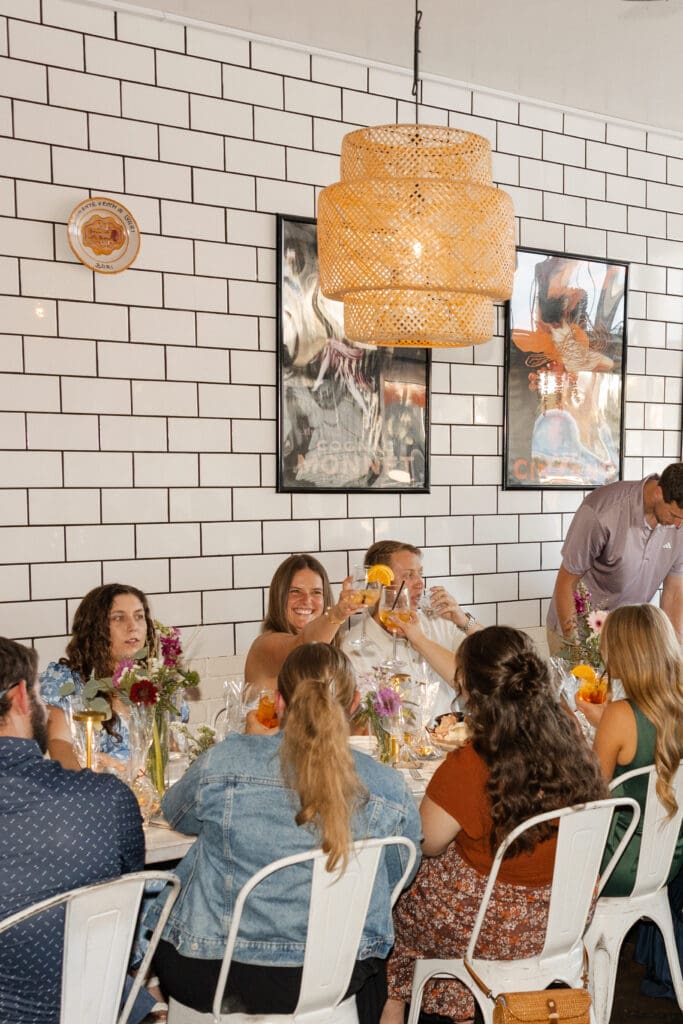
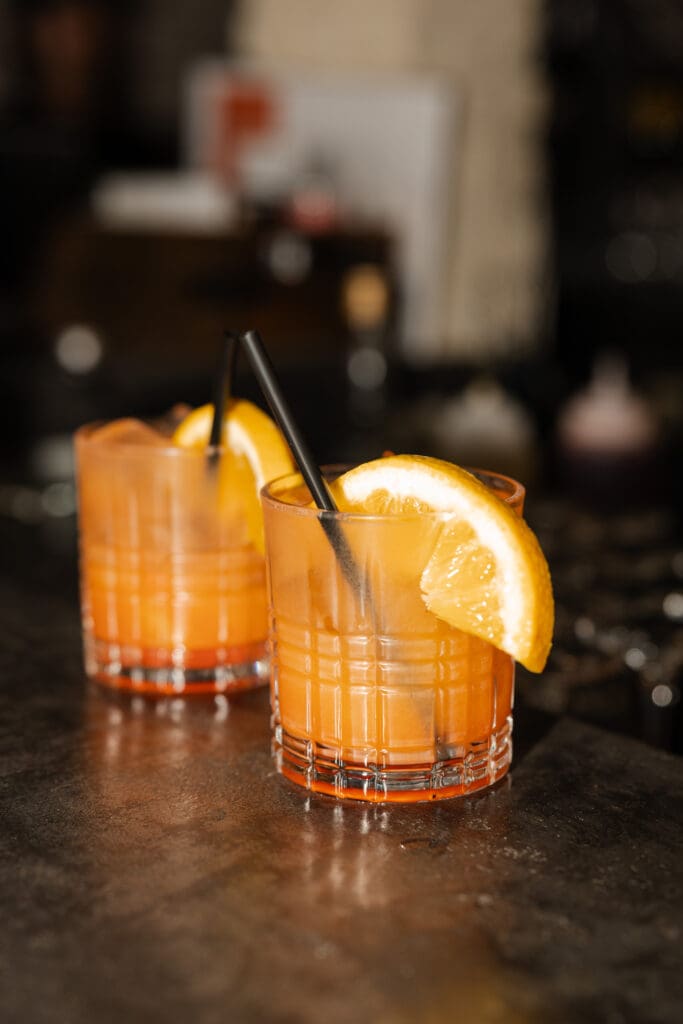
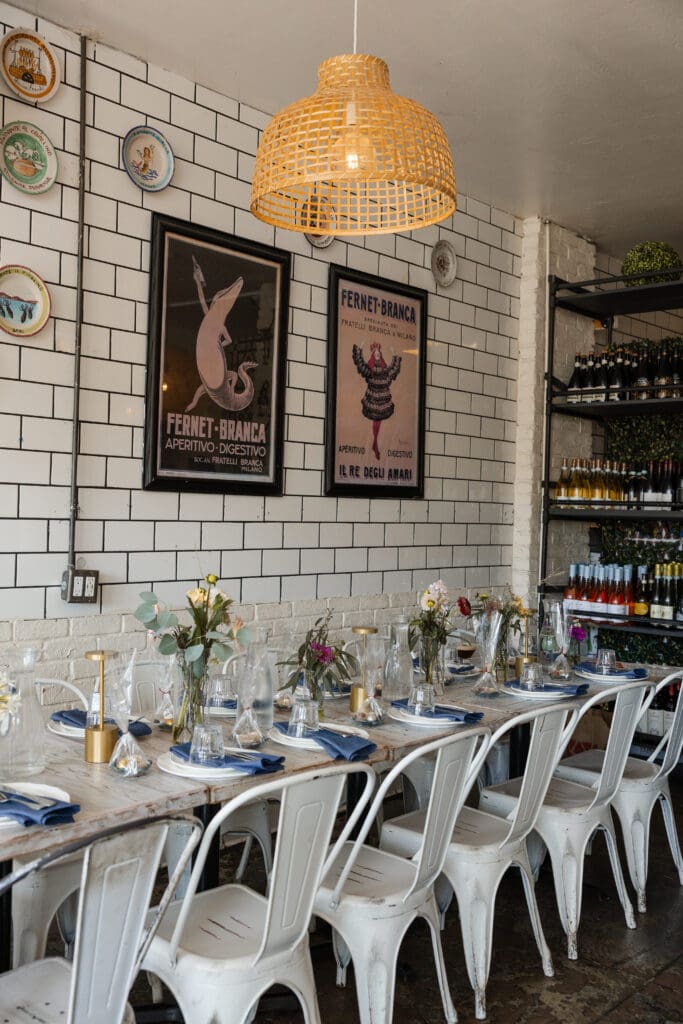
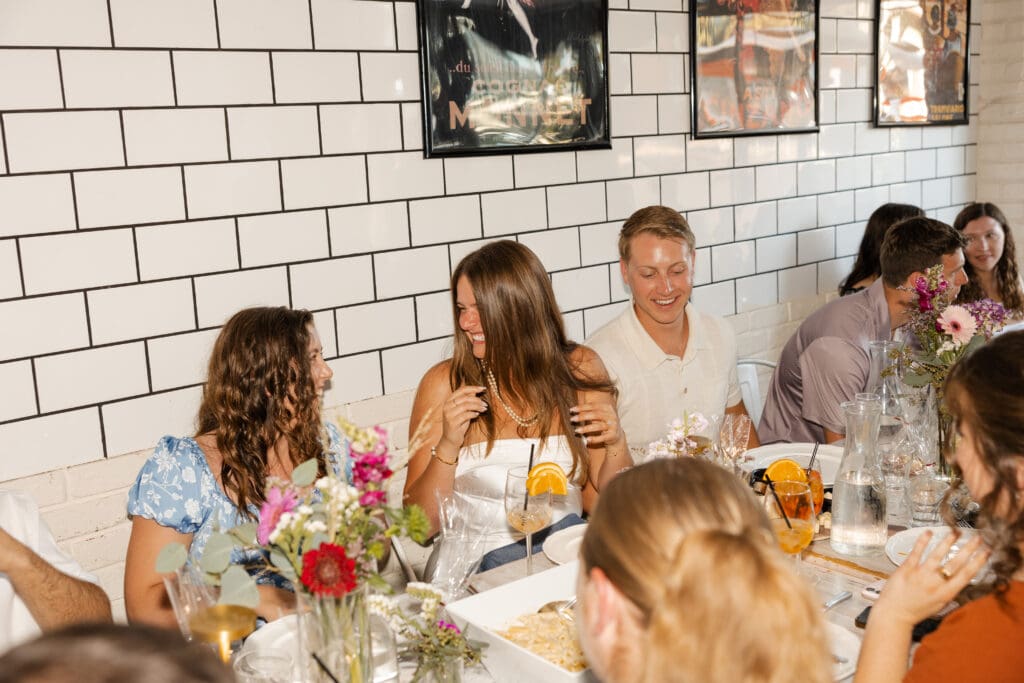
After my coverage ended, they invited me to stay and have dinner with them and their family. It gave me a chance to meet the people who would be surrounding them the next day, and it was such a fun way to begin the wedding weekend.
At one point, the restaurant staff actually thought I was part of the family. I had to laugh when I told them I’d only met everyone about an hour earlier.
But honestly, this is exactly the kind of connection I hope to build with my couples and their families.
Your wedding photographer is around for so many of the day’s most emotional and personal moments. I want everyone to feel comfortable with me long before I am standing there with a camera capturing those moments!
Communicating With Vendors & the Wedding Team
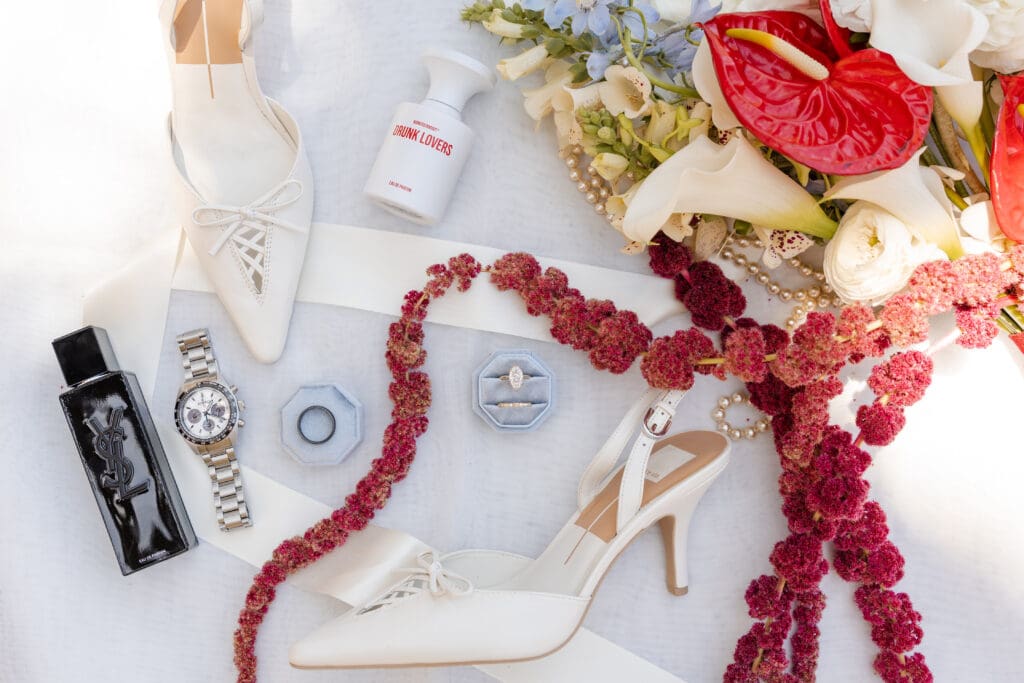
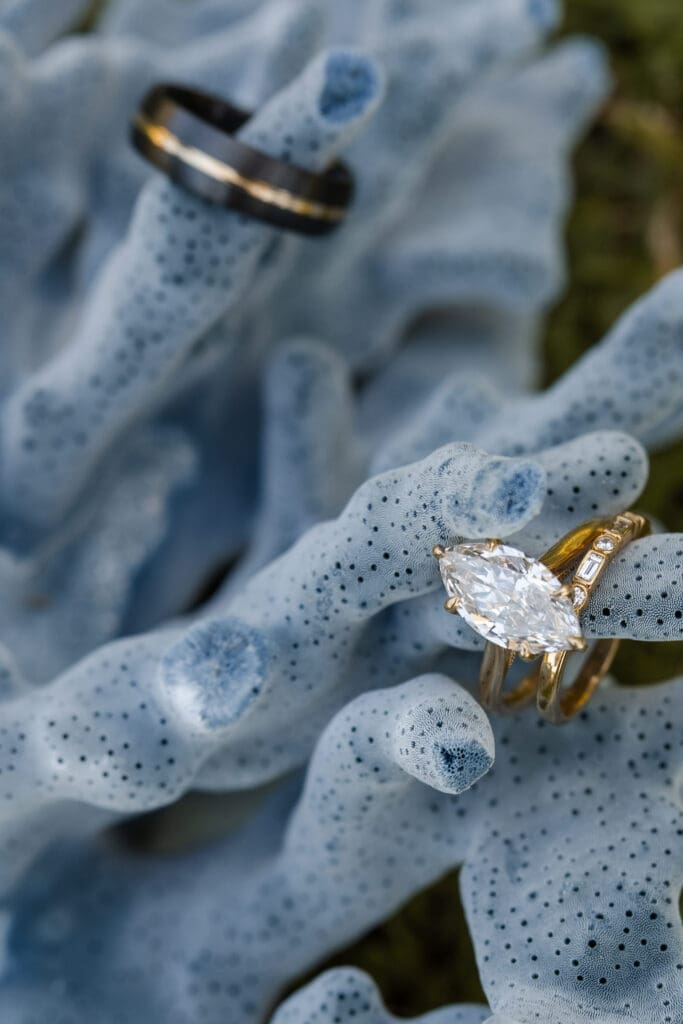
I was able to pick up some of Halie and Joe’s flatlay and detail items during the rehearsal dinner so I could get started on them early the next day.
Their florist, Breegan, was another wonderful part of that preparation. We had already connected before the wedding, and she arrived with beautiful florals and even brought extra stems specifically for the flatlay.
These details make the biggest difference.
Wedding photography is never a one-person production. The coordinator, the florist, planner, DJ, venue team, second shooter, and other vendors all affect how smoothly the day moves.
When everyone communicates and knows what the other people need, the entire experience feels easier.
Why Buffer Time is One of the Most Important Parts of a Wedding Timeline
After photographing more than 150 weddings over seven years, I learned one thing I can pretty much guarantee:
Something will change.
A wedding day is made up of real people, real emotions, moving parts, and occasionally a timeline that has decided to develop a personality of its own.
That’s why I always recommend building buffer time into the schedule.
My job is to photograph the first looks, portraits, ceremony, family, freinds, details, and all of the little moments happening around the couple. But my bigger responsibility is making sure the couple doesn’t feel like they’re spending their entire wedding day racing from one photo to the next.
I want you to have time to breathe.
To look around.
Time to hug your parents.
Time to actually enjoy the fact you’re married.
If getting ready runs twenty minutes behind, we can adjust. If family portraits take longer than expected, we can shift something else. The goal isn’t to follow a timeline perfectly. The goal is to create enough structure that we can stay calm when the timeline inevitably changes.
A wedding photographer’s job isn’t to make the timeline happen perfectly. It’s to know what to do when it doesn’t.
What Happens When a Wedding Day Falls Behind?
Halie and Joe’s wedding gave me a perfect example of why flexbility matters.
At one point, we were about 30 minutes behind schedule.
The original plan had us moving through the first look, couple portraits, bridal party portraits, family photos, then ceremony details in a fairly specific order.
Instead of standing around waiting for the timeline to catch up, I looked for opportunities to keep moving.
I asked groomsmen if they could get ready quickly so we could begin their portraits first rather than waiting to start with the bridesmaids. We adjusted the order, kept everyone informed, and continued working through what we could.
We ended up completing portraits around 3:40pm and moved some of the remaining formal photos to after the ceremony.
And somehow, we still stayed on schedule.
That’s where having a photographer who knows how to adapt makes a difference.
You don’t need someone who panics when the timeline changes. You need someone who looks at the situation and thinks, okay, what can we do next?
The Goal Isn’t to Rush Through Your Photos
I never want couples to look back on their wedding day and remember it as a series of appointments they had to get through.
Yes, there are photographs we need to make.
Yes, there are family combinations and more important moments that can’t be recreated.
But there must be room for the two of you to simply exist together!
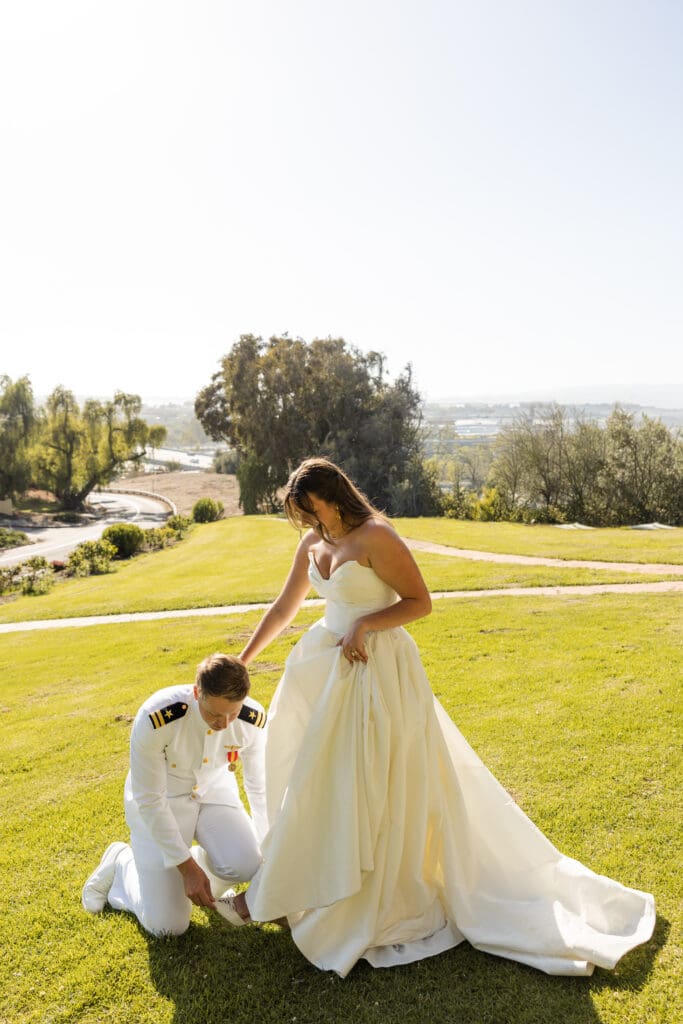
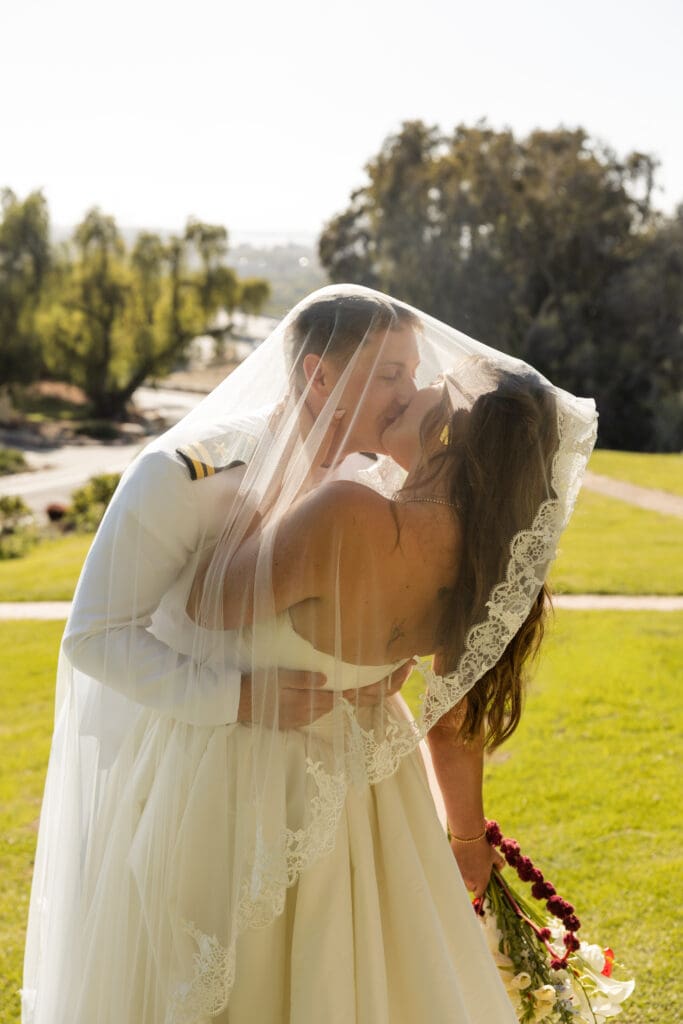
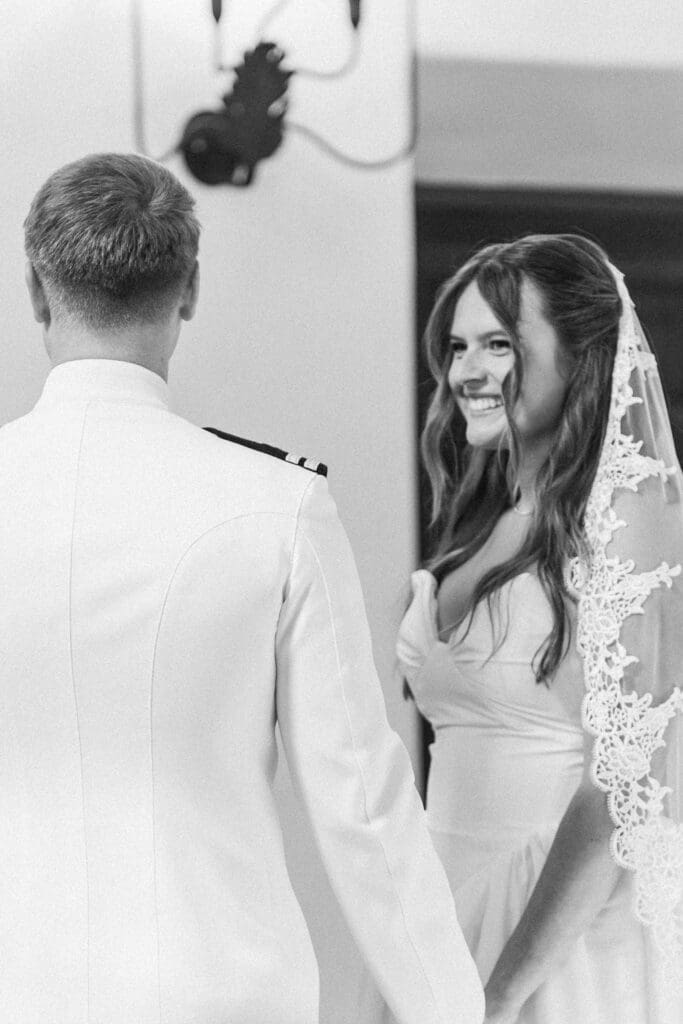
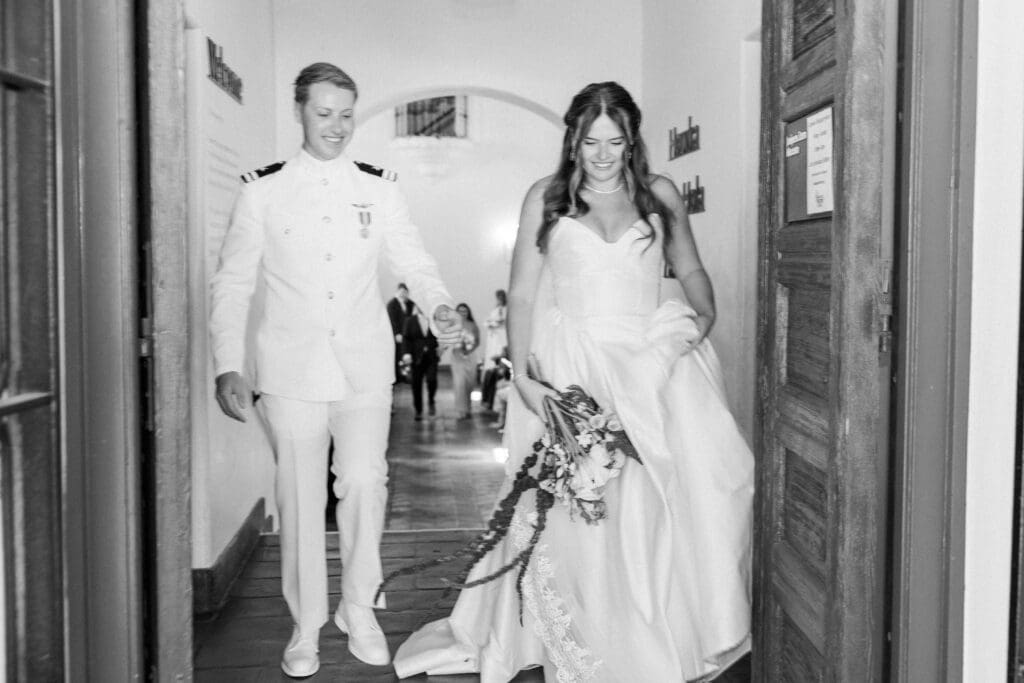
Some of my favorite images happen in those spaces between the planned photographs. A quiet moment after the first look. A laugh while we’re walking to the next location. The way someone looks at their new spouse when they think nobody is watching.
The timeline gives us a framework. It shouldn’t take over the day.
Sometimes the Best Photos Begin Before I Pick Up My Camera
One of my favorite moments from Halie and Joe’s wedding actually started before the ceremony.
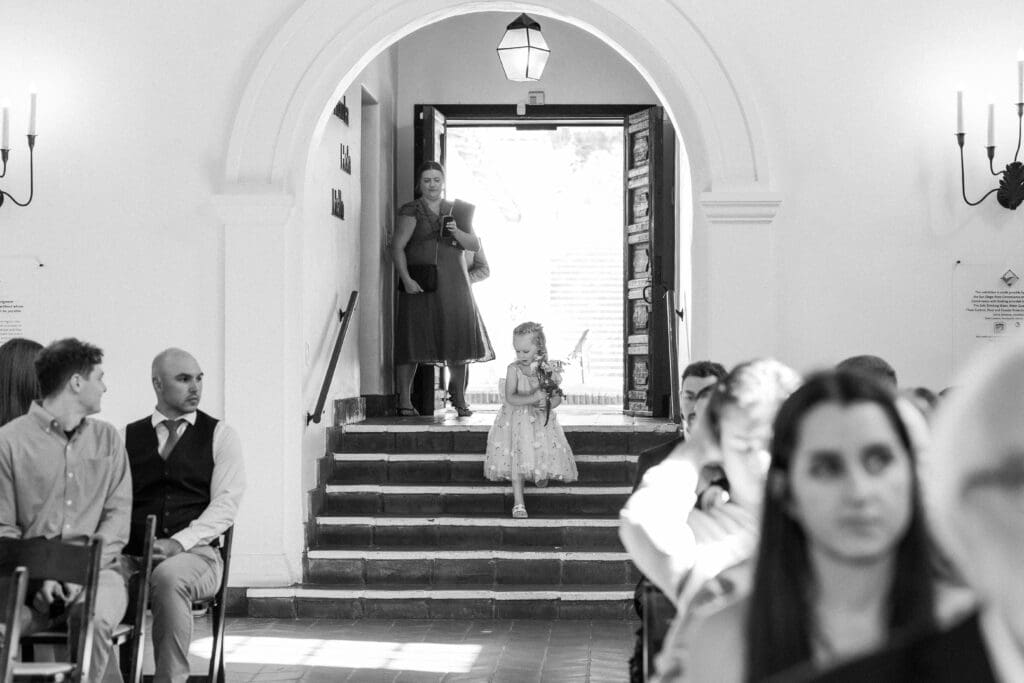
Everyone had mentioned that the flower girl was a little shy. They weren’t sure if she would feel comfortable walking down the aisle by herself.
I understood why.
Being little and walking toward a room full of people is intimidating enough. Add a stranger standing at the end of the aisle with a large camera pointed toward you and I can imagine it feels a bit bigger.
So I decided I didn’t want to be a stranger anymore.
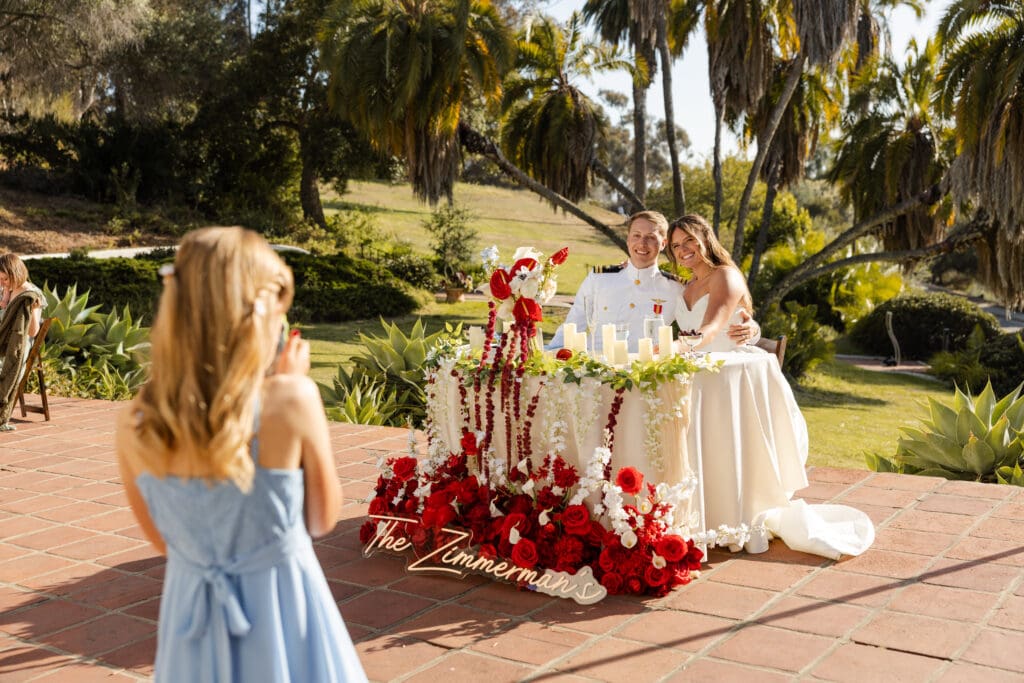
We talked about her beautiful dress. I showed her my camera. She got to take a few photos herself.
Little by little, the camera became something familiar instead of something intimidating. By the time the ceremony began, she had a familiar face waiting for her at the end of the aisle.
And she walked down that aisle. Confidently.
Watching that happen was such a sweet reminder that sometimes the best photographs begin long before I even press the shutter.
Preparing for the Ceremony
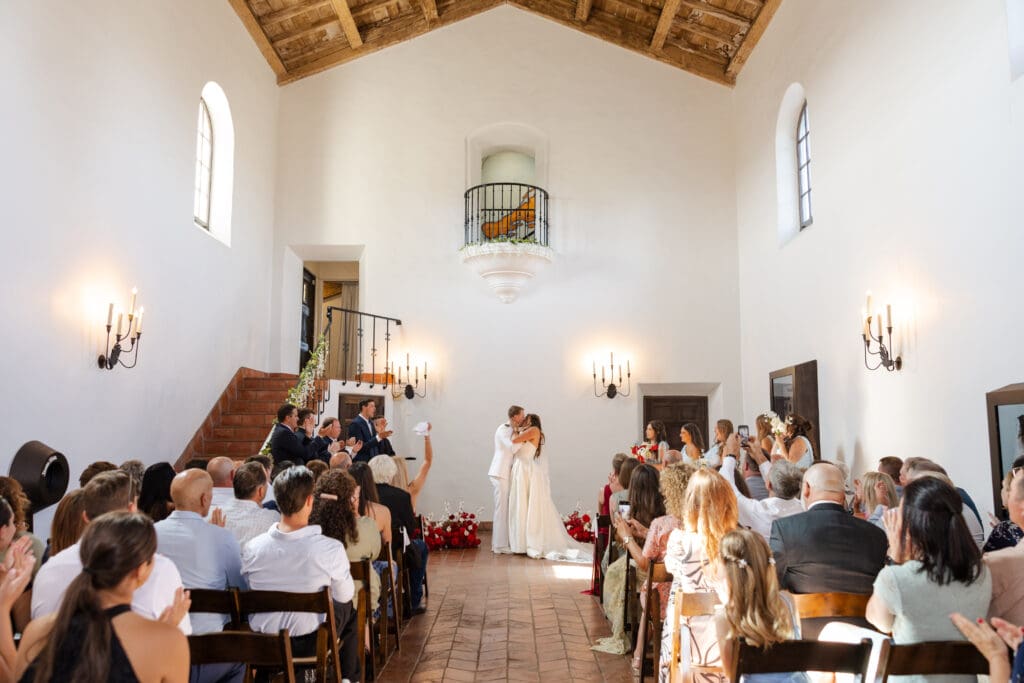
I always like to give myself about 20 to 30 minutes before the ceremony to reset and prepare.
This is when I photograph the ceremony space, capture any remaining details, photograph guests as they arrive, check my lighting, and make sure I know exactly where I want to be once the ceremony begins.
When I have a second shooter, I can divide that responsibility. They may focus on the bride while I photograph the groom, or we can cover different angles simultaneously.
When I’m photographing without a second shooter, preparation becomes even more important.
For example, when the groom is front-lit and the bride is back-lit, I need to be able to adjust quickly. I set up my camera so I can change my lighting settings with as little interruption as possible.
The less I have to think about my equipment in those moments, the more attention I can give to what’s actually happening in front of me.
What Makes a Wedding Photographer Valuable on the Wedding Day?
Beautiful photographs matter, obviously.
But on a wedding day, you’re hiring a person as much as you’re hiring an artsitic style.
For me, that means showing up prepared, communicating clearly, staying organized, and keeping a positive presence even when something unexpected happens.
I want to know the timeline.
The family photo list.
I want to know names.
And better yet, I want to know about surprises, special circumstances, or family dynamics that could affect the day.
Beyond the logistics of charged equipment and what not, I want someone my couples can look at when something changes and think:
She’s got it.
That’s the kind of presence I want to bring to a wedding.
Your Photographer is Part of Your Wedding-Day Experience
Couples spend an incredible amount of time with their photographer.
From getting ready through portraits, the ceremony, family photos, and often into the reception, your photographer is there for a huge portion of the day.
That means the way your photographer communicates matters.
If I’m stressed, overwhelmed, or panicking, you will probably feel it.
If I’m calm, organized, encouraging, and present, that becomes part of your experience too.
My job isn’t only to create beautiful images. But it’s to help you feel supported enough to actually enjoy the moments we’re capturing.
I want you to remember the excitement, the people who showed up for you, the way your partner looked at you, the parent who couldn’t hold back their tears, or the flower girl who found her confidence.
All of it!
Why I Love Destination Wedding Photography
One of my favorite parts of being a traveling wedding photographer is getting to photograph people and places that are completely new to me.
A California coastline feels different from an Arizona desert. Historic architecture creates a different kind of image than a modern venue. Every new location gives me something different to work with.
That’s one of the reasons I love traveling for weddings. I get to explore a place with fresh eyes, figuring out where the light falls best, what details make the venue special, and how I can incorporate those things into the gallery.
For me, destination wedding photography isn’t about recreating the same gallery in a different zip code.
It’s important that your wedding location is engraved into your story.
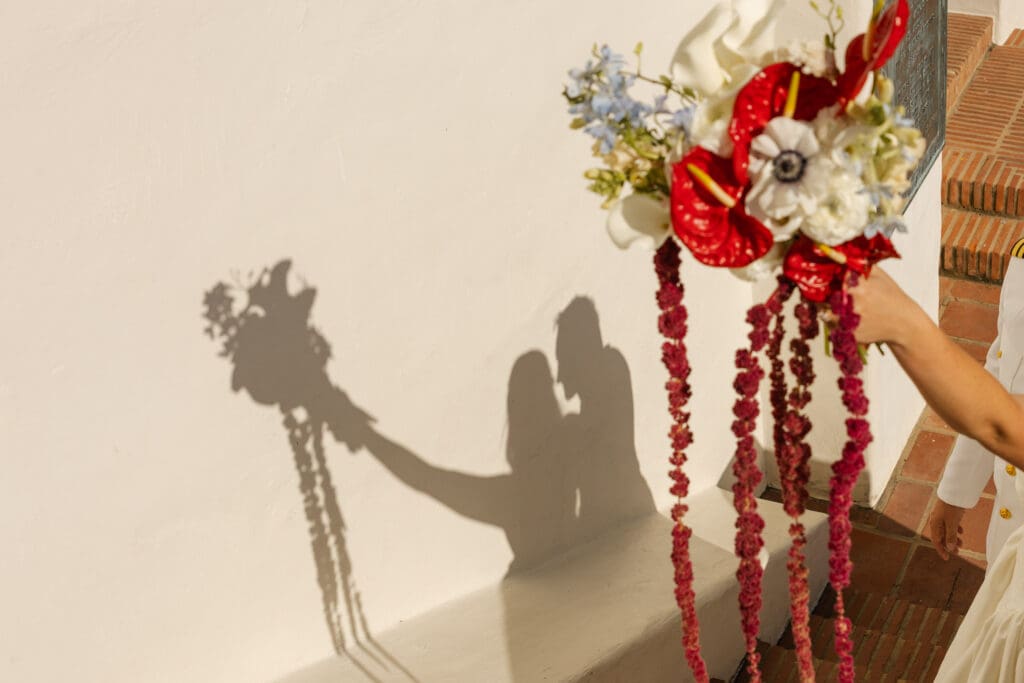
Planning an Out-of-State Wedding? Here’s What I’d Want You to Know
If you’re planning a wedding somewhere your photographer hasn’t photographed before, that doesn’t have to be a disadvantage.
In fact, it can be an opportunity for your photographer to approach the location with fresh eyes.
Before booking, I’d recommend asking how your photographer prepares for unfamiliar venues and travel.
A few things I’d want your photographer to know before the wedding:
- Your venue and ceremony locations
- Your family photo combinations
- Your ideal timeline
- Any important people or moments
- Special traditions or surpirses
- What matters most to you photographically
- Any restrictions your venue has
I’d also recommend building some buffer into your timeline and introducing your photographer to your planner or coordinator ahead of time.
The goal is for everyone to arrive on the wedding day already knowing how to work together.
Your photographer doesn’t need to have photographed your venue fifty times to create beautiful work there.
They need to know how to prepare.
When Should You Book an Out-of-State Wedding Photographer?
For an out-of-state or destination wedding, I recommend reaching out to your photographer 9-12 months before your wedding date whenever possible.
Popular dates and destination weddings can book quickly, especially if you’re planning a wedding in a major travel destination.
That said, don’t panic if your wedding is closer than that. I photograph weddings with different timelines, and availability will always depend on the date and location.
A general timeline might look like this:
9-12+ months out:
Reach out, review portfolios, have consultations, and secure your photographer.
6-9 months out:
Finalize travel plans, venue details, and begin building the photography timeline.
4-6 months out:
This is when I like to have flights, lodging, and transportation organized for an out-of-state wedding.
1-2 months out:
Finalize the timeline, family photo list, important moments, vendor information and any special circumstances.
Wedding week:
Everything should already be in place. My focus can shift entirely to photographing your day, rather than sorting logistics at the last minute.
For a destination wedding, booking early isn’t only about securing your date. It gives your photographer enough time to understand the location, plan travel, communicate with your vendor team and arrive feeling prepared.
Questions to Ask an Out-of-State Photographer
Choosing a photographer for an out-of-state wedding comes with a few extra considerations.
You’re not just looking for someone whose work you love. You’re trusting them to travel to an unfamiliar place, arrive prepared, communicate with your vendor team, and handle whatever the wedding day decides to throw your way.
Before booking a destination wedding photographer or an out-of-state wedding photographer, here are a few questions worth asking:
How do you travel for out-of-state weddings?
Ask what’s included in their travel fee, whether flights and accommodations are booked separately, and when they typically finalize travel arrangements. It’s imperative to know that logistics are being handled well in advance so there aren’t any surprises.
How do you prepare for a venue you’ve never photographed before?
This is a big one. A photographer doesn’t necessarily need to have photographed your venue before, but they should have a process for getting familiar with it. Ask whether they research the property beforehand., use maps or previous galleries, communicate with the venue, or arrive early to scout.
How early will you arrive?
For an out-of-state wedding, this is especially important. Personally, I prefer building enough time into my travel plans that I can arrive prepared and focused rather than racing from an airport to the venue the morning of.
What happens if our timeline falls behind?
This might be one of the most important questions to ask. Weddings rarely run perfectly according to the original timeline. Ask your photographer how they handle delays, changing light, missing family members and unexpected chances. You want someone who can adjust the plan without making you feel like you’re the problem.
How will you work with our planner or coordinator?
Your photographer shouldn’t operate in a bubble, but communicate well with others involved in the wedding process. Ask how they communicate with your planner, venue, florist, DJ, second shooter and other vendors. A photographer who knows how to collaborate can make the entire day feel more seamless.
Do you photograph destination weddings often?
Experience traveling for weddings can be valuable because destination and out-of-state celebrations often require more preparation and flexibility. That said, I wouldn’t make this a deal breaker. A photographer who has a thoughtful process for traveling and preparing for new venues can still be an excellent fit.
How will we communicate leading up to the wedding?
Ask when you’re planning calls, when they need your questionnaire and timeline, and how they’ll stay in touch as the wedding gets closer. The goal is to feel like you have someone keeping track of the photography details with you.
What do you need from us before the wedding?
A great photographer should be able to tell you exactly what they need. This might include your timeline, family photo list, venue information, inspiration images, vendor contracts, special traditions, or anything else that will help them understand what matters most to you.
All in all, the right destination wedding photographer should do more than travel to your wedding, but arrived prepared to take care of you once they get there.
Behind Every Wedding Gallery is a Lot You Never See
When you look through your wedding gallery, you don’t see the flight booking.
You don’t see the Google Maps scouting.
Or don’t see the timeline revisions, the charged batteries, the backup equipment, or the conversations with your planner and florist.
You don’t see the moment I notice the light changing across the reception space or decide that we need to move portraits ten minutes earlier.
And ideally, you don’t see any of the moments when the timeline starts to fall apart either.
You just see your wedding day.
That’s the goal.
All of the preparation should quietly disappear into the background so that what remains is you, your people, and the story you were actually there to live.
Planning a Destination or Out-of-State Wedding?
I bring the same preparation, organization, and calm presence to every wedding, no matter how familiar or unfamiliar the location may be. And genuinely, I love the adventure of discovering somewhere new with my camera in hand.
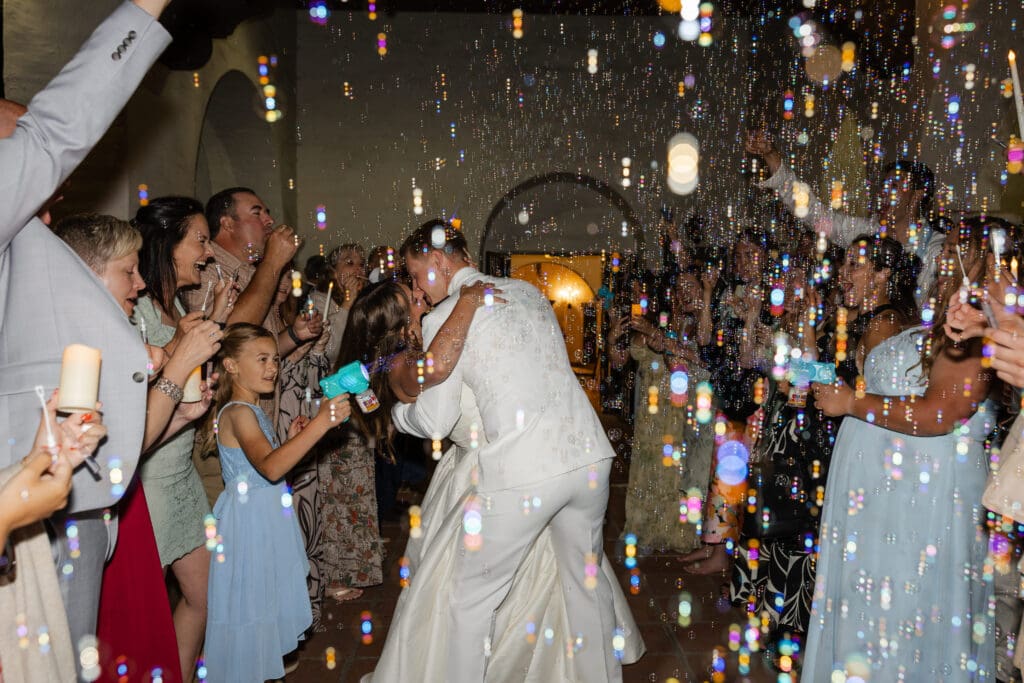

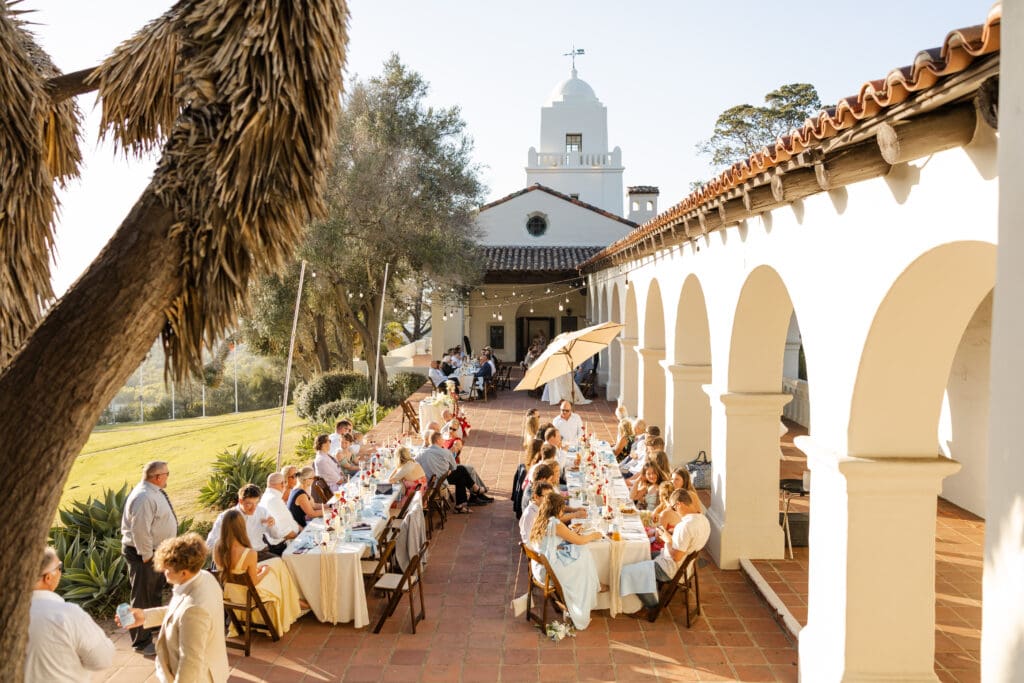
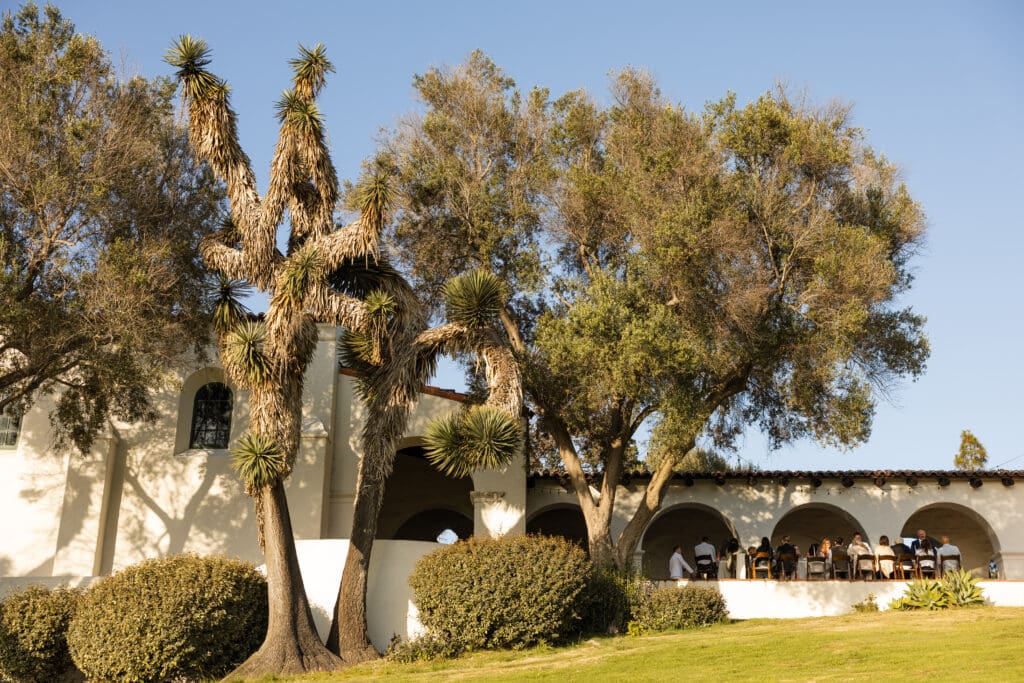
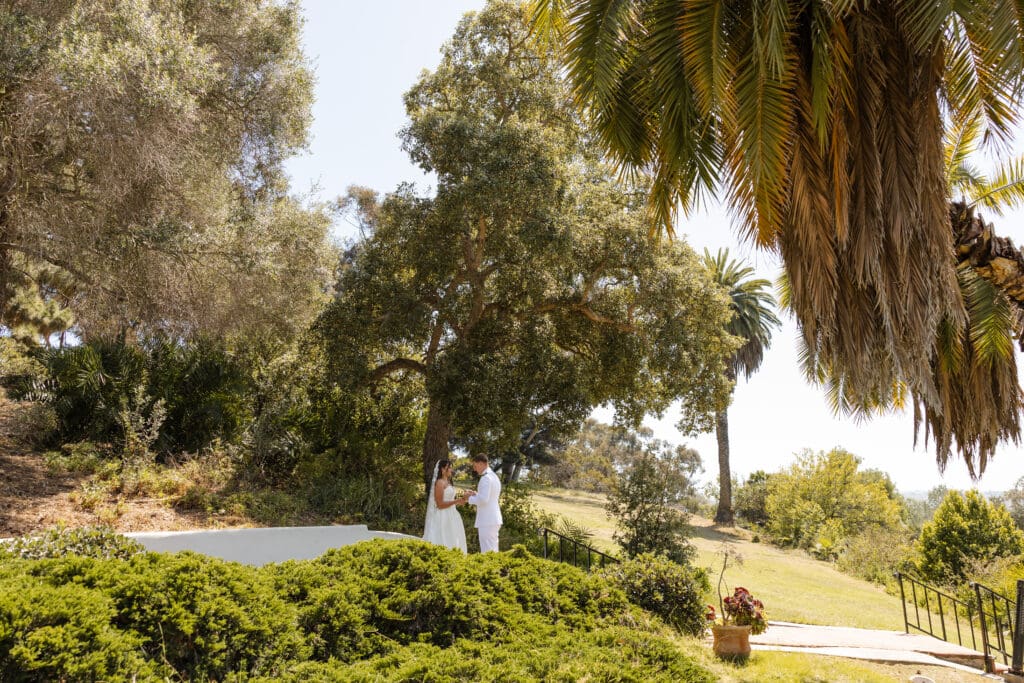
Because your wedding doesn’t have to happen in Arizona to feel completely at home with me.
If you’re looking for a travel wedding photographer or destination wedding photographer for your next chapter, I’d love to hear where you’re headed.
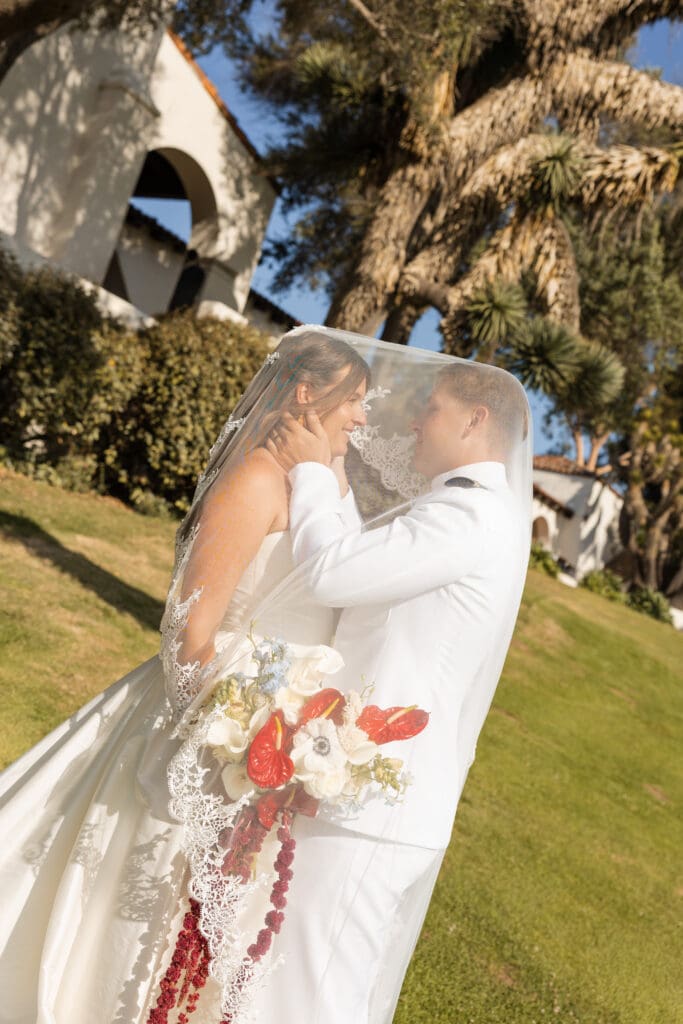
Ready to get in touch about your 2027 or 2028 wedding?
Fill out this inquiry here and let’s hop on a consultation call!
Interested in learning more? Click the button below to inquire about your date and location!


Whether it’s a place close to my heart like San Diego, California, or a dreamy destination all the way in Europe, I’m ready to capture your story wherever your journey takes you. No matter the distance, I’m in! Let’s make your dream destination wedding or session come to life.
Planning a Destination Wedding?


